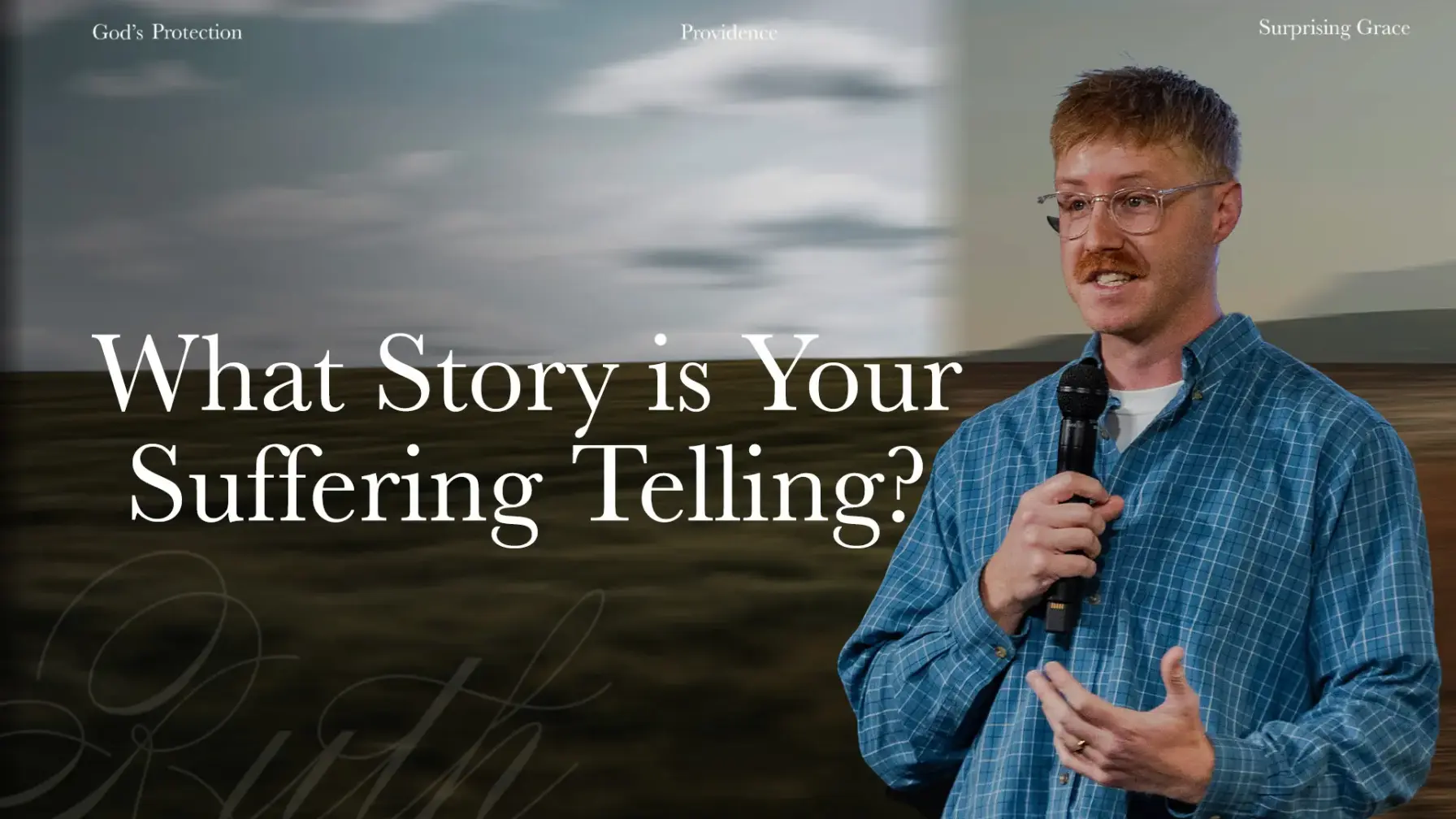
You've felt it—the weight of loss, the sting of disappointment, the confusion of unanswered questions. But what if your suffering isn't the end of your story? In this opening message in the Book of Ruth, we discover that God is writing a redemptive narrative even in our darkest seasons, and the thread of grace is woven through every moment we thought was empty.
No moments found — try different words.
VeggieTales Theology
1. VeggieTales Theology
VeggieTales Theology asks, "How does this apply to me?"
2. Armchair Theology
Armchair Theology asks, "What is the context of the story?"
"And for arrogance, I have seen nothing breed it faster or in more offensive forms than the worship of the letter."
— George MacDonald
"Where is Jesus?"
3. Christology
John 1:1
In the beginning was the Word, and the Word was with God, and the Word was God.
John 6:35
Jesus said to them, "I am the bread of life; whoever comes to me shall not hunger, and whoever believes in me shall never thirst."
Colossians 1:17
And he is before all things, and in him all things hold together.
The Gospel of Ruth
Ruth 4:17
And the women of the neighborhood gave him a name, saying, "A son has been born to Naomi." They named him Obed. He was the father of Jesse, the father of David.
We will never be able to make sense of our individual stories until we step back and see our story in Christ.
He's sovereign, not in the sense that He creates suffering for our good, but that no suffering is outside of His ability to use in the story of redemption.
What story is your suffering telling?
Ruth 1:1
In the days when the judges ruled there was a famine in the land…
Judges 21:25
In those days there was no king in Israel. Everyone did what was right in his own eyes.
Ruth 1:1–5
In the days when the judges ruled there was a famine in the land, and a man of Bethlehem in Judah went to sojourn in the country of Moab, he and his wife and his two sons. The name of the man was Elimelech and the name of his wife Naomi, and the names of his two sons were Mahlon and Chilion. They were Ephrathites from Bethlehem in Judah. They went into the country of Moab and remained there. But Elimelech, the husband of Naomi, died, and she was left with her two sons. These took Moabite wives; the name of the one was Orpah and the name of the other Ruth. They lived there about ten years, and both Mahlon and Chilion died, so that the woman was left without her two sons and her husband.
"Although the threads of my life have often seemed knotted, I know, by faith, that on the other side of the embroidery there is a crown."
— Corrie Ten Boom
What Can We Feel in Suffering?
We can feel bitter or we can feel the groan.
Ruth 1:19–20
So the two of them went on until they came to Bethlehem. And when they came to Bethlehem, the whole town was stirred because of them. And the women said, "Is this Naomi?" She said to them, "Do not call me Naomi; call me Mara, for the Almighty has dealt very bitterly with me."
Bitterness may tell you the truth of what happened, but it lies about what God is doing.
"Naomi is interpreting her hard circumstances as coming from God's enmity toward her; as the rest of the book will make plain, she is mistaken."
— ESV Study Bible
Romans 8:22–23
For we know that the whole creation has been groaning together in the pains of childbirth until now. And not only the creation, but we ourselves, who have the firstfruits of the Spirit, groan inwardly as we wait eagerly for adoption as sons, the redemption of our bodies.
What Can We See in Suffering?
Ruth 1:21
"I went away full, and the Lord has brought me back empty. Why call me Naomi, when the Lord has testified against me and the Almighty has brought calamity upon me?"
We can see suffering as in vain or pregnant with purpose.
Ruth 1:19
So the two of them went on until they came to Bethlehem…
"She sees her suffering as God's testimony, as proof that God condemns her for some sin of which she is unaware. However, her troubles will provide the means to God's bounty."
— ESV Study Bible
"If you knew what God knows, you would ask exactly for what he gives."
— Timothy Keller
What Can We Do in Suffering?
Ruth 1:22
So Naomi returned, and Ruth the Moabite her daughter-in-law with her, who returned from the country of Moab. And they came to Bethlehem at the beginning of barley harvest.
We can return.
We use analytics to improve this site. See our
Privacy policy
for details.